- What Is Cancer Staging?
- Stage 1: Early Cancer
- Stage 2: Intermediate Progression
- Stage 3: Locally Advanced Cancer
- Stage 4: Advanced or Metastatic Cancer
- Understanding the TNM Classification System
- When Is Cancer Considered Advanced?
- Locally Advanced Cancer
- Metastatic Cancer
- Why Are Many Cancers Diagnosed at an Advanced Stage?
- Lack of Awareness
- Neglecting Symptoms
- Fear of Diagnosis
- Limited Screening
- Common Warning Signs of Cancer
- Persistent Changes in Voice
- Difficulty Swallowing
- Unexplained Digestive Problems
- Changes in Bowel Habits
- Abnormal Bleeding
- Persistent Fever
- Swollen Lymph Nodes
- Symptoms That Do Not Resolve
- Importance of Early Detection
- Major Types of Cancer Treatment
- Surgery
- Radiation Therapy
- Chemotherapy
- How Treatment Changes According to Cancer Stage
- Stage 1 Treatment
- Stage 2 Treatment
- Stage 3 Treatment
- Stage 4 Treatment
- The Importance of Personalized Cancer Care
- How BigHope Medicare Supports Cancer Patients
- Conclusion
Cancer Staging and Treatment: Classification and Management
Cancer is one of the most challenging health conditions faced by individuals and families across the world. While a cancer diagnosis can be overwhelming, understanding how cancer is classified and treated can help patients make informed decisions and seek timely medical care. One of the most important aspects of cancer management is determining its stage, as the stage helps doctors understand the extent of the disease and select the most appropriate treatment approach.
The earlier cancer is identified, the greater the possibility of effective treatment and better outcomes. Unfortunately, many patients are diagnosed only after the disease has progressed because early symptoms are often ignored or mistaken for less serious conditions. This makes awareness, timely diagnosis, and access to expert medical guidance extremely important. Patients seeking comprehensive information about treatment options, specialist consultations, and modern cancer therapies can explore Oncology Treatment in India to better understand the available approaches to cancer care and management.
In this article, we will explore cancer staging, how cancer is classified, common warning signs, available treatment options, and the role of early intervention in improving treatment success.
What Is Cancer Staging?
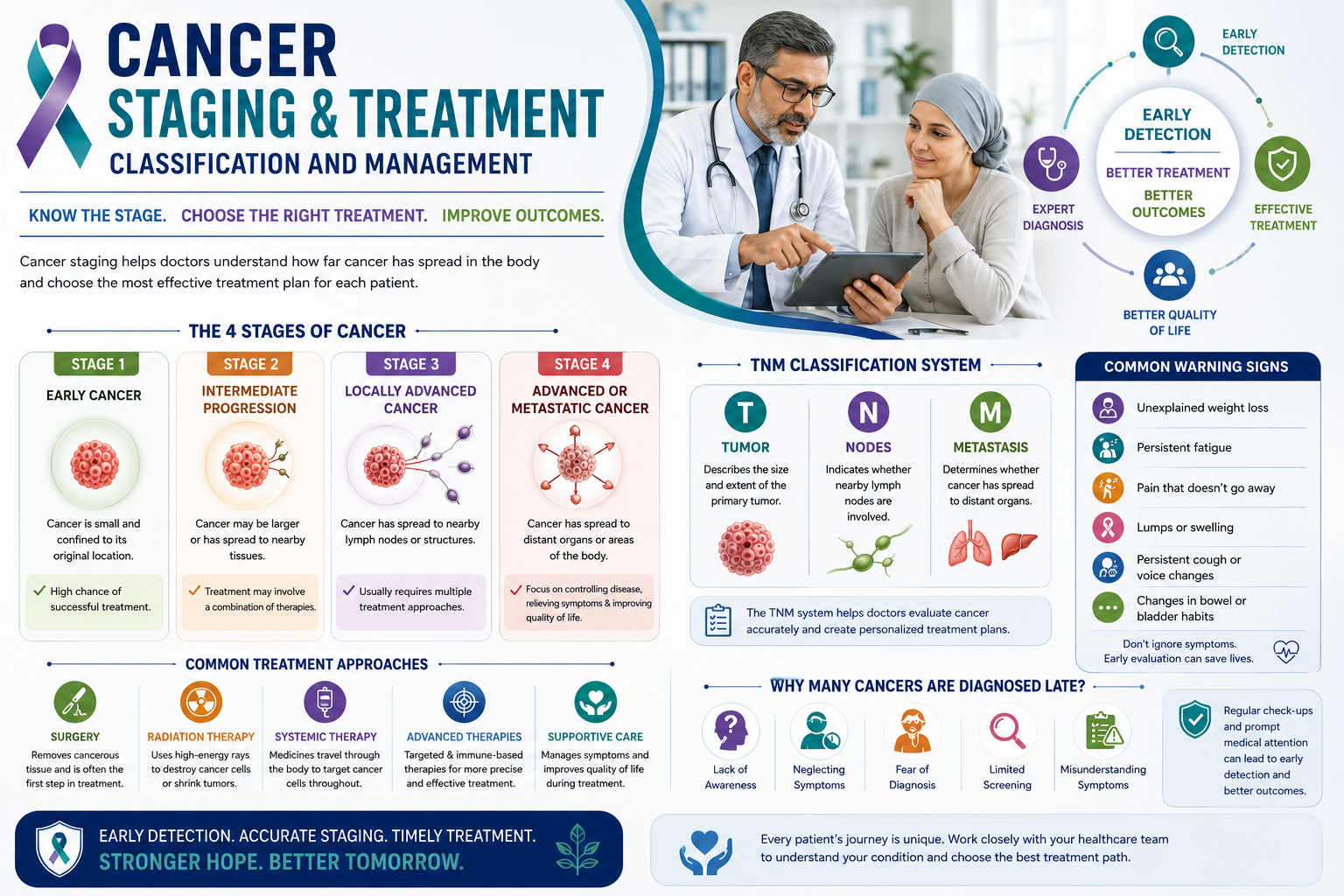
Cancer staging is a system used to describe how far cancer has progressed within the body. It helps healthcare professionals determine the size of the tumor, whether nearby lymph nodes are involved, and whether the disease has spread to distant organs.
Staging provides valuable information that guides treatment planning and helps predict outcomes. While there are several methods used to classify cancer, one of the simplest and most commonly understood approaches is dividing cancer into four stages:
Stage 1: Early Cancer
Stage 1 cancer is generally considered an early-stage disease. At this stage, the cancer is usually confined to its original location and has not spread significantly.
Because the disease is localized, treatment is often more straightforward, and the chances of successful management are generally higher. Many cancers diagnosed at this stage can be treated effectively with a single treatment modality such as surgery or radiation therapy.
Stage 2: Intermediate Progression
Stage 2 cancer indicates that the disease has grown larger or may have begun involving nearby tissues. However, it is still relatively limited in its spread.
Treatment at this stage may involve a combination of therapies depending on the type and location of the cancer.
Stage 3: Locally Advanced Cancer
Stage 3 cancer is often referred to as locally advanced cancer. This means the disease has extended beyond its original site and may involve nearby structures or regional lymph nodes.
Treatment becomes more complex at this stage and often requires multiple treatment approaches working together to achieve the best possible outcome.
Stage 4: Advanced or Metastatic Cancer
Stage 4 cancer represents advanced disease where cancer cells have spread to distant organs or areas of the body.
This stage is also known as metastatic cancer. Treatment goals may vary depending on the specific situation and can focus on controlling disease progression, improving quality of life, reducing symptoms, and extending survival.
Understanding the TNM Classification System
While the four-stage system is easy for patients to understand, healthcare professionals often use a more detailed method known as the TNM classification system.
TNM stands for:
T (Tumor): Describes the size and extent of the primary tumor.
N (Nodes): Indicates whether nearby lymph nodes are involved.
M (Metastasis): Determines whether cancer has spread to distant organs.
The TNM system allows doctors to assess the disease more accurately and create personalized treatment plans based on the specific characteristics of each patient's cancer. Since the stage and extent of cancer significantly influence treatment decisions, they can also impact the overall cost of care. Patients looking to understand the financial aspects of diagnosis and treatment can learn more about Cancer Treatment Cost in India and the factors that affect treatment expenses.
When Is Cancer Considered Advanced?
Many patients ask when cancer is classified as advanced.
Generally, cancer is considered advanced when it has spread beyond its original location or has significantly involved nearby tissues and lymph nodes. Advanced cancer can be categorized into:
Locally Advanced Cancer
In locally advanced cancer, the disease remains confined to the region where it originated but has spread extensively to surrounding tissues or lymph nodes.
Although treatment may be more complicated, many patients with locally advanced cancer can still receive aggressive treatment aimed at controlling or eliminating the disease.
Metastatic Cancer
Metastatic cancer occurs when cancer cells spread to distant organs such as the lungs, liver, bones, or brain.
At this stage, treatment often focuses on disease control, symptom management, and maintaining the best possible quality of life.
Why Are Many Cancers Diagnosed at an Advanced Stage?
One of the biggest challenges in cancer care is delayed diagnosis. Many patients seek medical attention only after symptoms become severe.
Several factors contribute to late-stage diagnosis:
Lack of Awareness
Many people are unaware of early warning signs associated with cancer. Symptoms may initially appear mild and are often ignored.
Neglecting Symptoms
Some individuals assume symptoms will disappear on their own and delay consulting a healthcare professional.
Fear of Diagnosis
Fear and anxiety about possible results can sometimes prevent people from seeking timely medical evaluation.
Limited Screening
Regular screening programs help identify certain cancers before symptoms develop. However, many individuals do not participate in routine screening due to lack of awareness or access.
When cancer is detected at an early stage, treatment is often simpler and more effective. Delayed diagnosis can reduce treatment options and make disease management more challenging.
Common Warning Signs of Cancer
Although symptoms vary depending on the type of cancer, certain warning signs should never be ignored.
Persistent Changes in Voice
A temporary voice change caused by infection or irritation may not be concerning. However, a persistent change in voice lasting several weeks or months requires medical evaluation.
Difficulty Swallowing
Difficulty swallowing food or persistent discomfort while eating can indicate problems that need investigation.
Unexplained Digestive Problems
Persistent digestive symptoms, especially those that do not improve with routine treatment, should be evaluated carefully.
Changes in Bowel Habits
Long-lasting changes in bowel movements, including altered frequency or consistency, may require further examination.
Abnormal Bleeding
Unexpected bleeding, especially between normal menstrual cycles or after menopause, should never be ignored.
Persistent Fever
A fever that continues without a clear explanation may indicate an underlying medical condition and should be investigated.
Swollen Lymph Nodes
Enlarged lymph nodes that persist over time can be associated with various health conditions, including certain cancers.
Symptoms That Do Not Resolve
A general rule is that symptoms persisting beyond a reasonable period without improvement deserve medical attention. Problems that continue despite treatment should always be investigated further.
Importance of Early Detection
Early detection remains one of the most effective strategies in cancer management.
When cancer is diagnosed early:
- Treatment options are often less complex.
- Recovery rates may improve.
- The likelihood of preserving normal organ function can increase.
- Patients may experience fewer complications.
- Overall treatment costs may be lower.
Public awareness, health education, regular medical checkups, and screening programs all play vital roles in detecting cancer before it progresses to advanced stages.
Major Types of Cancer Treatment
Cancer treatment has evolved significantly over the years. Today, multiple treatment options are available depending on the cancer type, stage, location, and overall health of the patient.
The three primary treatment categories include surgery, radiation therapy, and chemotherapy.
Surgery
Surgery plays a major role in cancer treatment, particularly when the disease is localized.
The primary objective of surgery is to remove the cancerous tissue while preserving as much normal tissue as possible.
In many early-stage cancers, surgery alone may provide effective treatment. In other situations, surgery may be combined with additional therapies to improve outcomes.
Radiation Therapy
Radiation therapy uses high-energy rays to destroy cancer cells.
This treatment can be used:
- As the primary treatment.
- Before surgery to shrink tumors.
- After surgery to eliminate remaining cancer cells.
- Alongside chemotherapy to improve effectiveness.
One significant advantage of radiation therapy is its ability to preserve certain organs while still treating the disease effectively.
Chemotherapy
Chemotherapy uses medications to destroy cancer cells or slow their growth.
Chemotherapy may be administered:
- Before surgery to reduce tumor size.
- After surgery to lower recurrence risk.
- Alongside radiation therapy.
- As the primary treatment in specific cancers.
- For advanced-stage disease management.
The treatment plan is carefully designed according to the patient's diagnosis and individual needs.
How Treatment Changes According to Cancer Stage
Cancer treatment varies considerably depending on the stage of the disease.
Stage 1 Treatment
For early-stage cancers, treatment often focuses on complete removal or destruction of the tumor.
Common approaches include:
- Surgery
- Radiation therapy
- Organ-preserving treatments when appropriate
The goal is usually curative treatment.
Stage 2 Treatment
At Stage 2, treatment may involve one or more therapies.
Patients may receive:
- Surgery followed by additional treatment
- Radiation therapy
- Chemotherapy
- Combined treatment approaches
The exact strategy depends on the type and location of the cancer.
Stage 3 Treatment
Locally advanced cancers frequently require a combination of treatments.
These may include:
- Chemotherapy
- Radiation therapy
- Surgery
- Targeted treatment sequences
The objective is often to control local disease and maximize treatment effectiveness.
Stage 4 Treatment
For metastatic cancer, treatment plans are individualized.
Approaches may focus on:
- Controlling disease progression
- Managing symptoms
- Improving quality of life
- Extending survival
Many patients receive combinations of therapies tailored to their specific circumstances.
The Importance of Personalized Cancer Care
Every cancer diagnosis is unique. Two patients with the same type of cancer may require completely different treatment plans depending on factors such as:
- Cancer stage
- Tumor location
- Overall health
- Age
- Organ function
- Treatment goals
This is why expert evaluation and multidisciplinary care are essential for achieving the best possible outcomes.
How BigHope Medicare Supports Cancer Patients
Navigating a cancer diagnosis can be overwhelming for patients and families. Understanding treatment options, selecting the right hospital, consulting specialists, and managing appointments can add significant stress during an already difficult time.
BigHope Medicare helps simplify this journey by acting as a trusted bridge between patients and experienced medical specialists. Through a verified multi-specialty hospital network, patients can receive guidance regarding diagnosis, treatment options, and specialist consultations. Individuals seeking reliable healthcare support and access to trusted specialists can explore affordable medical treatment in India through BigHope Medicare to learn how personalized guidance and hospital coordination can help streamline the treatment journey.
The support team helps patients:
- Connect with relevant cancer specialists.
- Understand available treatment options.
- Compare treatment pathways transparently.
- Access trusted hospitals and advanced care facilities.
- Receive appointment booking assistance.
- Obtain guidance throughout the treatment process.
The goal is to ensure that patients and their families have the information, support, and confidence needed to make informed healthcare decisions.
Conclusion
Cancer staging plays a crucial role in determining how cancer is managed and treated. From Stage 1 early disease to Stage 4 metastatic cancer, each stage requires a carefully planned approach based on the extent of the disease.
Awareness remains one of the strongest tools in the fight against cancer. Recognizing warning signs, seeking timely medical attention, and participating in recommended screenings can significantly improve the chances of early diagnosis and successful treatment.
Modern cancer care offers multiple treatment options, including surgery, radiation therapy, and chemotherapy, often used in combination to achieve the best outcomes. Because every patient's condition is unique, personalized treatment planning and expert guidance are essential.
With access to trusted specialists, advanced hospitals, and reliable healthcare support, patients can navigate their treatment journey with greater clarity and confidence, ensuring that every decision is informed and every step is supported.
FAQs
Question 1: What are the four stages of cancer?
Answer:
Cancer is commonly classified into four stages. Stage 1 refers to early, localized cancer. Stage 2 indicates limited growth beyond the original site. Stage 3 is considered locally advanced cancer involving nearby tissues or lymph nodes. Stage 4, also known as metastatic cancer, means the disease has spread to distant organs.
Question 2: How is cancer staging determined?
Answer:
Cancer staging is typically determined using the TNM classification system. TNM stands for Tumor (size and extent of the primary tumor), Nodes (involvement of nearby lymph nodes), and Metastasis (spread to distant organs). This system helps healthcare specialists assess disease progression and plan the most appropriate cancer treatment.
Question 3: Why is early cancer diagnosis important?
Answer:
Early cancer diagnosis improves the chances of successful treatment and better long-term outcomes. When cancer is detected at an early stage, treatment options such as surgery or radiation therapy are often more effective. Early intervention may also reduce complications, preserve organ function, and improve overall quality of life.
Question 4: What are the main treatment options for cancer?
Answer:
The primary cancer treatment options include surgery, radiation therapy, and chemotherapy. Depending on the cancer type, stage, and location, these treatments may be used individually or in combination. Treatment plans are personalized to achieve the best possible outcome while considering the patient's overall health and treatment goals.
Question 5: What are some warning signs that may indicate cancer?
Answer:
Common warning signs of cancer include persistent changes in voice, difficulty swallowing, unexplained digestive problems, abnormal bleeding, swollen lymph nodes, prolonged fever, and lasting changes in bowel habits. Any symptom that persists or does not improve with routine treatment should be evaluated by a healthcare professional promptly.