- Understanding Cancer Treatment Success Rates
- Why Cancer Survival Rates Have Improved
- Earlier Detection
- Better Treatment Technologies
- Personalized Treatment Planning
- High-Survival Cancer Types
- Cancer Is Increasingly Becoming a Manageable Disease
- Why Cancer Stage Matters So Much
- Stage I
- Stage II
- Stage III
- Stage IV
- The Importance of Early Detection
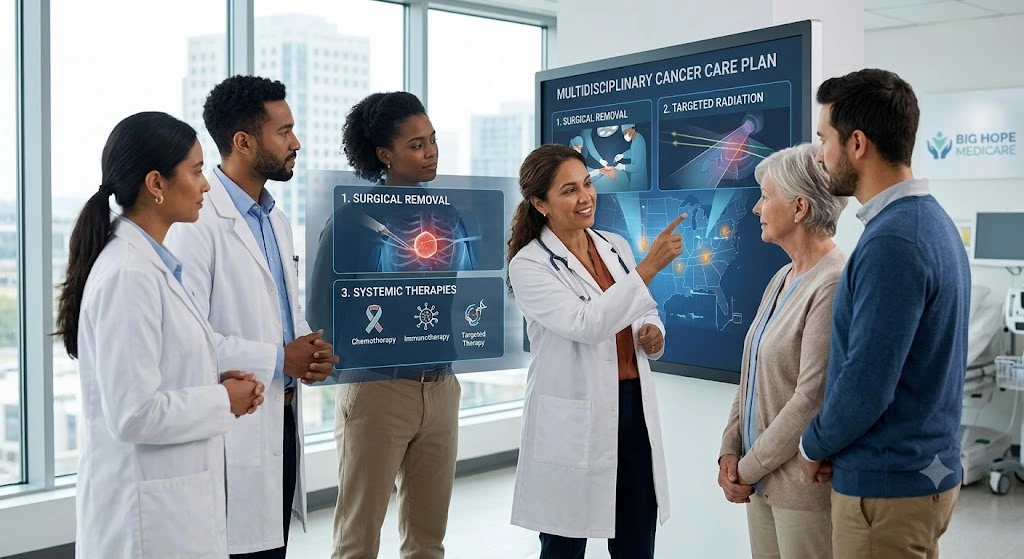
- How Cancer Treatment Plans Are Developed
- Surgery and Cancer Success Rates
- Chemotherapy: A Valuable Treatment Tool
- Radiation Therapy and Precision Treatment
- The Rise of Targeted Therapies
- Immunotherapy: Harnessing the Body's Defense System
- Hormone and Cell-Based Therapies
- Hormone Therapy
- Cell Therapies
- What Happens If Initial Treatment Does Not Work?
- The Importance of Support During Cancer Treatment
- How BigHope Medicare Supports Cancer Patients
- Conclusion
A cancer diagnosis is one of the most life-changing moments a person can experience. For many patients and families, the first question that comes to mind is often: "What are the chances of successful treatment?" While cancer remains a serious disease, the reality today is far more encouraging than it was decades ago.
Medical science has transformed the way cancer is diagnosed, treated, and managed. Advances in surgery, radiation therapy, chemotherapy, targeted therapies, immunotherapy, and personalized treatment approaches have significantly improved outcomes for many patients. As a result, cancer treatment success rates have increased substantially, giving millions of people around the world more opportunities to live longer and healthier lives.
Understanding cancer treatment success rates can help patients make informed decisions and approach treatment with realistic expectations and confidence. It is important to remember that success rates vary depending on the type of cancer, the stage at diagnosis, the patient's overall health, and the treatments available. Since treatment plans can differ significantly from one patient to another, many individuals also want to understand the financial aspects of care. Learning about cancer treatment cost in India can help patients and families better prepare for treatment and make informed healthcare decisions.
In this article, we will explore what cancer treatment success rates mean, why survival outcomes have improved, how early detection affects prognosis, the role of modern treatment options, and why there is more hope than ever before for people facing cancer.
Understanding Cancer Treatment Success Rates
When discussing cancer outcomes, healthcare professionals often refer to survival rates. One of the most commonly used measurements is the five-year survival rate.
This statistic indicates the percentage of patients who are alive at least five years after their cancer diagnosis. While survival rates do not predict an individual patient's outcome, they provide valuable insight into how effectively cancers are being treated.
Today's cancer survival statistics demonstrate significant progress compared to previous decades.
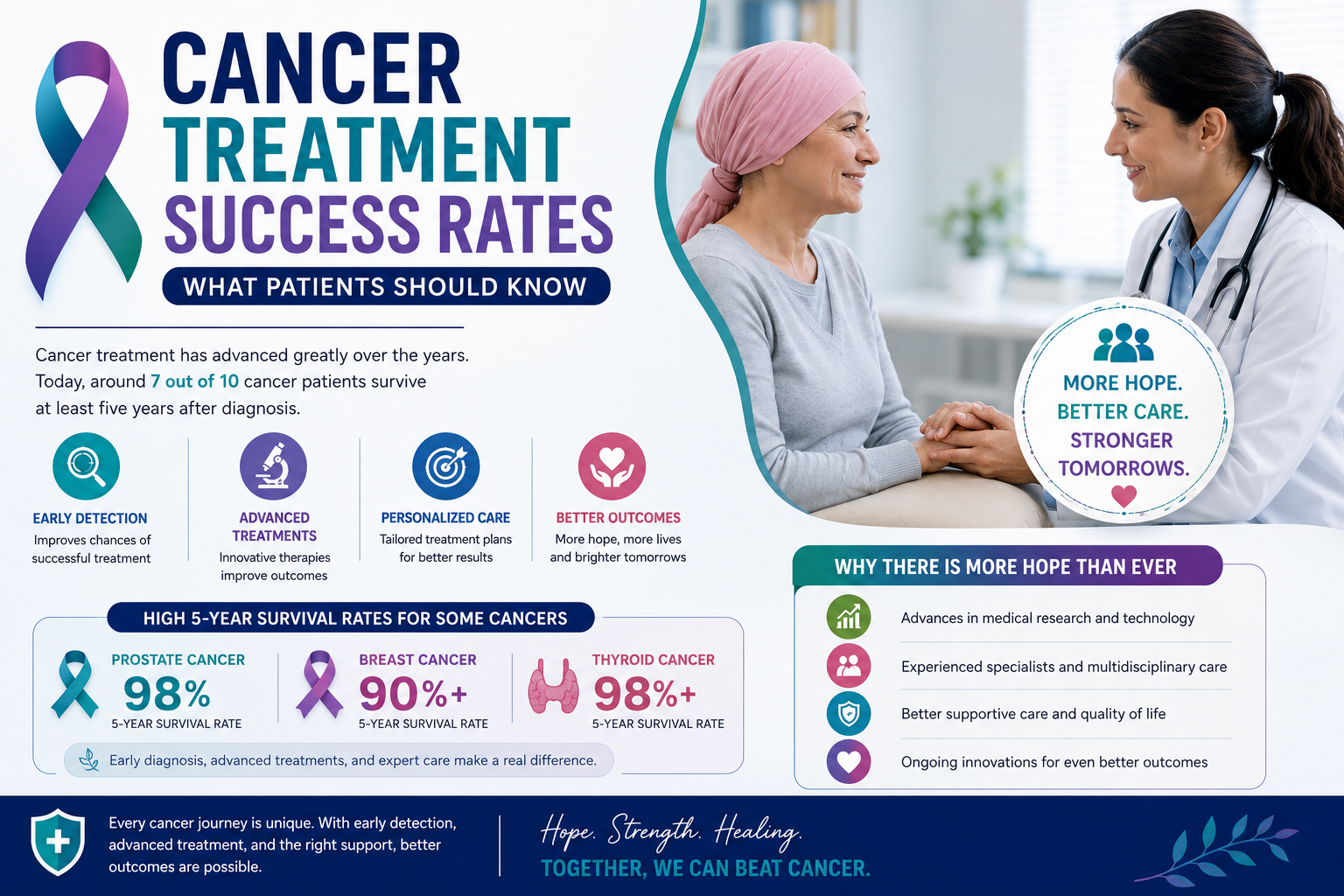
Currently, approximately seven out of ten cancer patients survive at least five years after diagnosis. This represents a major improvement compared to survival rates several decades ago when only about half of cancer patients survived for the same period.
This increase reflects remarkable advances in cancer detection, diagnosis, treatment planning, and supportive care. As treatment technologies continue to evolve, patients often have questions not only about outcomes but also about affordability. Understanding the cost of cancer treatment in India can help individuals and families prepare for treatment and make informed decisions about their healthcare journey.
Why Cancer Survival Rates Have Improved
Several important factors have contributed to improved cancer treatment success rates.
Earlier Detection
One of the most significant reasons for improved outcomes is earlier diagnosis.
Many cancers can now be identified before they become advanced. Early detection allows treatment to begin when the disease is more localized and easier to manage.
When cancer is diagnosed in its early stages, treatment options are often more effective and may require less extensive intervention.
Better Treatment Technologies
Cancer treatment has evolved dramatically over the past few decades.
In the past, treatment options were relatively limited. Today, healthcare teams have access to a wide range of advanced therapies that can be tailored to individual patients.
These innovations have helped improve both survival outcomes and quality of life during treatment.
Personalized Treatment Planning
Modern cancer care focuses on personalized treatment strategies rather than a one-size-fits-all approach.
Each patient's cancer is unique. Treatment plans are designed based on the type of cancer, its stage, specific biological characteristics, and the patient's overall health condition.
This individualized approach increases the likelihood of achieving better outcomes.
High-Survival Cancer Types
While every cancer diagnosis deserves serious attention, some cancers now have exceptionally encouraging survival rates when diagnosed and treated appropriately.
For example:
- Prostate cancer has a five-year survival rate approaching 98%.
- Breast cancer has a survival rate exceeding 90%.
- Thyroid cancer has survival rates above 98%.
These statistics highlight how advances in screening, diagnosis, and treatment have dramatically improved outcomes for many patients.
However, it is equally important to recognize that not all cancers have the same prognosis.
Certain cancers, including pancreatic cancer and some brain tumors, continue to present significant treatment challenges. Even so, ongoing medical advances are helping improve outcomes in these areas as well.
Cancer Is Increasingly Becoming a Manageable Disease
One of the most important shifts in cancer care is the changing perception of the disease itself.
In many cases, cancer is no longer viewed solely as an immediately life-threatening condition. Instead, some forms of cancer are increasingly being managed as long-term chronic illnesses.
Much like conditions such as diabetes or high blood pressure, certain cancers can now be controlled for extended periods with ongoing treatment and monitoring.
Many patients are living for years after diagnosis while continuing to work, care for their families, and enjoy meaningful lives.
This does not mean treatment is always easy. Cancer therapy can involve physical, emotional, and financial challenges. However, the growing ability to control many cancers represents a major milestone in modern healthcare.
Why Cancer Stage Matters So Much
One of the most important factors affecting cancer treatment success rates is the stage at which cancer is diagnosed.
Cancer stage refers to how far the disease has spread within the body.
The earlier cancer is detected, the better the chances of successful treatment.
Stage I
Cancer remains confined to a small area.
Stage II
The cancer has grown but remains localized.
Stage III
Cancer has spread to nearby tissues or lymph nodes.
Stage IV
Cancer has spread to distant parts of the body, a condition known as metastasis.
The relationship between stage and survival is significant.
For example, when certain cancers are identified in Stage I or Stage II, survival rates can be as high as 90%. However, if the same cancer is diagnosed after it has spread extensively, survival outcomes can decrease substantially.
This is why awareness, screening, and prompt medical evaluation are so important.
The Importance of Early Detection
Early detection remains one of the most powerful tools in improving cancer treatment success.
Finding cancer before symptoms become severe can dramatically increase treatment effectiveness.
Benefits of early diagnosis include:
- Higher survival rates
- More treatment options
- Less aggressive treatment requirements
- Better preservation of normal organ function
- Improved quality of life
Patients should never ignore persistent symptoms or delay medical evaluation when concerns arise.
Seeking timely medical guidance can make a significant difference in outcomes.
How Cancer Treatment Plans Are Developed
Following diagnosis, healthcare professionals create a treatment plan based on extensive research and evidence.
The initial approach is often referred to as first-line treatment.
First-line treatment represents the therapy with the strongest evidence of effectiveness for a specific type and stage of cancer.
Depending on the situation, treatment may involve:
- Surgery
- Chemotherapy
- Radiation therapy
- Targeted therapy
- Immunotherapy
- Hormone therapy
- Combination treatment approaches
Each plan is customized to maximize effectiveness while considering the patient's individual needs.
Surgery and Cancer Success Rates
Surgery continues to play a critical role in cancer treatment, particularly when cancer remains localized.
The primary goal of surgery is to remove the tumor completely.
Modern surgical techniques have become increasingly sophisticated.
Many procedures now use minimally invasive approaches involving smaller incisions, specialized instruments, and faster recovery times.
When cancer is detected early and completely removed, surgery may provide excellent long-term outcomes.
Chemotherapy: A Valuable Treatment Tool
Chemotherapy remains one of the most widely used cancer treatments.
It works by targeting rapidly growing cancer cells throughout the body.
Although chemotherapy can cause side effects such as fatigue, nausea, and hair loss, modern supportive medications have significantly improved symptom management.
For many cancer types, chemotherapy continues to be one of the most effective treatment options available.
It may be used:
- Before surgery
- After surgery
- Alongside radiation therapy
- For advanced-stage disease management
Radiation Therapy and Precision Treatment
Radiation therapy uses high-energy rays to destroy cancer cells.
Today's radiation technologies are far more precise than those available in previous decades.
Modern systems can focus treatment directly on the tumor while minimizing exposure to surrounding healthy tissues.
This precision helps improve treatment effectiveness while reducing side effects.
Radiation therapy remains an important component of treatment for many cancers.
The Rise of Targeted Therapies
One of the most exciting developments in cancer care is targeted therapy.
Unlike traditional treatments that affect both healthy and cancerous cells, targeted therapies focus on specific genetic or molecular characteristics within cancer cells.
These treatments function with remarkable precision.
For some cancers, targeted medications can control disease progression for years.
This approach represents a major advancement in personalized cancer care.
Immunotherapy: Harnessing the Body's Defense System
Immunotherapy has transformed the treatment landscape for several cancer types.
Rather than attacking cancer directly, immunotherapy helps the body's immune system recognize and destroy cancer cells.
This approach has produced remarkable results for some patients.
In certain cases, patients who previously had limited treatment options have achieved long-term disease control through immunotherapy.
Although immunotherapy is not effective for everyone, it continues to be one of the most promising areas of cancer research and treatment.
Hormone and Cell-Based Therapies
Additional treatment options are also improving outcomes.
Hormone Therapy
Certain cancers depend on hormones for growth.
Hormone therapy helps block these signals and can be highly effective in managing hormone-sensitive cancers.
Cell Therapies
Advanced cell therapies involve modifying immune cells to target cancer more effectively.
Although still evolving, these treatments have already shown significant success in some blood cancers and continue to expand treatment possibilities.
What Happens If Initial Treatment Does Not Work?
Not every patient responds to the first treatment approach.
Fortunately, cancer treatment often involves multiple options.
Healthcare teams frequently develop:
- First-line treatments
- Second-line treatments
- Third-line treatments
If one strategy proves ineffective, alternative approaches may be available.
Additionally, clinical trials provide access to innovative therapies that may not yet be widely available.
These trials contribute to ongoing advances in cancer care and can offer valuable opportunities for eligible patients.
The Importance of Support During Cancer Treatment
Cancer treatment affects more than physical health.
Patients often face emotional, psychological, and practical challenges throughout their journey.
Support from healthcare professionals, family members, friends, counselors, and patient communities can play an important role in coping with treatment.
Maintaining emotional well-being is just as important as managing physical symptoms.
Patients are encouraged to ask questions, seek information, and actively participate in treatment decisions.
How BigHope Medicare Supports Cancer Patients
Understanding treatment options, selecting the right hospital, consulting specialists, and coordinating appointments can feel overwhelming after a cancer diagnosis.
BigHope Medicare helps simplify this process by connecting patients with experienced medical specialists and trusted healthcare institutions. Patients looking for affordable medical treatment in India through BigHope Medicare can benefit from expert guidance, hospital coordination, and access to trusted healthcare providers that support informed treatment decisions.
Through a verified multi-specialty hospital network, patients can receive support with:
- Specialist consultations
- Treatment guidance
- Hospital selection
- Appointment coordination
- Treatment comparisons
- Access to advanced cancer care services
The goal is to ensure that every patient receives transparent information, reliable guidance, and access to appropriate treatment options without unnecessary confusion or stress.
By helping patients navigate complex healthcare decisions, BigHope Medicare supports individuals and families throughout their treatment journey.
Conclusion
Cancer treatment success rates have improved dramatically over the past several decades. Advances in early detection, surgery, chemotherapy, radiation therapy, targeted therapies, immunotherapy, and personalized treatment planning have transformed outcomes for many patients.
Today, approximately seven out of ten cancer patients survive at least five years after diagnosis, and survival rates for several cancer types are even higher. While challenges remain, particularly for certain aggressive cancers, ongoing medical innovation continues to create new opportunities for better outcomes.
Perhaps the most important message is that there is more hope than ever before. Early diagnosis, access to appropriate treatment, expert medical guidance, and continued advancements in cancer care are helping more people live longer and healthier lives after a cancer diagnosis.
For patients and families navigating this journey, informed decisions, timely treatment, and trusted support can make a meaningful difference every step of the way.
Question 1: What is the current cancer treatment success rate?
Answer:
Cancer treatment outcomes have improved significantly over the past few decades. Today, approximately 70% of cancer patients survive at least five years after diagnosis. Success rates vary depending on the type of cancer, stage at diagnosis, and treatment approach, but advances in early detection and modern therapies continue to improve survival outcomes.
Question 2: How does early cancer diagnosis affect survival rates?
Answer:
Early cancer diagnosis can dramatically improve treatment success rates. When cancer is detected at Stage I or Stage II, treatment is often more effective because the disease remains localized. Early intervention may lead to higher survival rates, more treatment options, and better long-term outcomes compared to advanced-stage cancer.
Question 3: Which cancer treatments have improved survival rates the most?
Answer:
Modern cancer treatments such as targeted therapy, immunotherapy, precision radiation therapy, advanced surgical techniques, and chemotherapy have significantly improved survival rates. These treatments allow healthcare specialists to personalize cancer care, target tumors more effectively, and improve disease control while reducing damage to healthy tissues.
Question 4: Does the stage of cancer influence treatment success?
Answer:
Yes, cancer stage is one of the most important factors affecting treatment success. Early-stage cancers generally have better survival rates because they are confined to a specific area. Advanced-stage or metastatic cancers can be more challenging to treat, although newer therapies continue to improve outcomes for many patients.
Question 5: Can cancer be managed as a long-term condition?
Answer:
In many cases, cancer is increasingly being managed as a chronic condition rather than an immediately life-threatening disease. Advances in targeted therapy, immunotherapy, hormone therapy, and ongoing monitoring allow some patients to live for many years with controlled disease while maintaining a good quality of life.