- How Cancer Stage Influences Treatment Decisions
- Early-Stage Cancer Treatment Options
- Surgery
- Radiotherapy
- Understanding Systemic Cancer Therapies
- Adjuvant Therapy: Treatment After Surgery
- Neoadjuvant Therapy: Treatment Before Surgery
- Chemotherapy in Cancer Treatment
- Immunotherapy: Harnessing the Power of the Immune System
- How Immunotherapy Works
- Cancers Commonly Treated with Immunotherapy
- Targeted Therapy: Precision-Based Cancer Treatment
- How Targeted Therapy Works
- Cancers Where Targeted Therapy Plays a Role
- Hormone Therapy and Endocrine Treatments
- Radionuclide and Radioactive Therapies
- Treating Advanced and Metastatic Cancer
- Combination Therapy: A Personalized Approach
- The Importance of Expert Oncology Guidance
- Conclusion
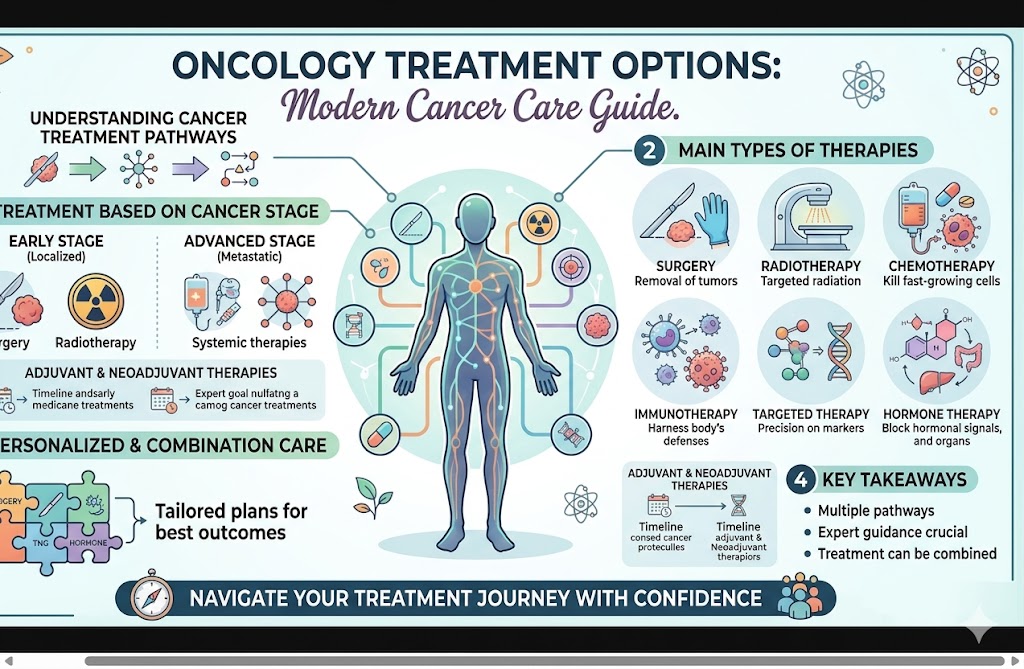
Oncology Treatment Options: Modern Cancer Care Guide
Cancer treatment has evolved significantly over the years, offering patients more personalized and effective options than ever before. One of the most important aspects of successful cancer management is selecting the right treatment approach based on the type of cancer, its stage, and the overall condition of the patient.
Today, oncology treatment is no longer limited to a single therapy. Instead, specialists often combine different treatment methods to achieve the best possible outcomes. From surgery and radiation therapy to advanced systemic treatments such as chemotherapy, immunotherapy, targeted therapy, hormone therapy, and radionuclide treatments, modern oncology provides multiple pathways to fight cancer effectively.
Understanding these treatment options can help patients and their families make informed decisions and feel more confident throughout their healthcare journey. Patients exploring advanced and cost-effective treatment solutions can also learn more about oncology treatment in India and affordable cancer care options, including access to specialized therapies and comprehensive cancer management services.
Choosing the right treatment plan often requires expert guidance, careful evaluation, and access to experienced oncology specialists who can recommend the most suitable approach for each patient's unique condition.
How Cancer Stage Influences Treatment Decisions
One of the most important factors in cancer treatment planning is determining the stage of the disease. The stage indicates how far the cancer has spread and helps specialists identify the most appropriate treatment strategy.
In early-stage cancers, treatment is often focused on eliminating the tumor completely and preventing recurrence. The primary treatment methods typically include:
- Surgery
- Radiotherapy (Radiation Therapy)
When cancer is diagnosed at an advanced or metastatic stage, meaning it has spread beyond its original location, treatment goals may shift toward controlling disease progression, reducing symptoms, improving quality of life, and extending survival. In such cases, systemic therapies become a central component of treatment.
Patients seeking comprehensive treatment solutions can also explore affordable medical treatment in India through Big HopeMedicare, where expert guidance, access to trusted specialists, and personalized treatment support can help simplify the cancer care journey.
Because every cancer case is unique, treatment plans are carefully tailored to the patient's specific condition and medical requirements.
Early-Stage Cancer Treatment Options
Surgery
Surgery remains one of the most effective treatment options for many early-stage cancers. The primary goal is to remove the cancerous tumor from the body before it spreads to other areas.
Depending on the location and size of the tumor, surgery may be performed alone or combined with other treatment methods. Advances in surgical techniques have improved outcomes while reducing recovery times and minimizing complications.
Radiotherapy
Radiotherapy uses carefully targeted radiation to destroy cancer cells. It is commonly used either as a primary treatment or alongside surgery.
Radiotherapy may help:
- Eliminate remaining cancer cells after surgery
- Reduce the risk of recurrence
- Target specific cancerous areas while preserving healthy tissue
For many patients with localized cancer, radiotherapy plays a crucial role in achieving long-term disease control.
Understanding Systemic Cancer Therapies
When cancer extends beyond a localized area or when there is a significant risk of recurrence, systemic therapies are often recommended.
Systemic treatments work throughout the body rather than focusing on a single location. These therapies aim to identify and destroy cancer cells wherever they may exist.
The major categories of systemic oncology treatments include:
- Chemotherapy
- Immunotherapy
- Targeted Therapy
- Hormone (Endocrine) Therapy
- Radionuclide and Radioactive Therapies
These treatments may be administered individually or in combination depending on the patient's diagnosis and treatment objectives.
Adjuvant Therapy: Treatment After Surgery
In some situations, surgery successfully removes the visible tumor, but specialists may still be concerned about microscopic cancer cells remaining in the body.
To reduce the risk of recurrence, additional treatment may be recommended after surgery. This approach is known as adjuvant therapy.
Adjuvant treatment may involve:
- Chemotherapy
- Targeted therapy
- Hormone therapy
- Other systemic treatments
The purpose of adjuvant therapy is to lower the likelihood of cancer returning and improve long-term treatment outcomes.
By addressing potential hidden cancer cells, adjuvant therapy can play a vital role in comprehensive cancer management.
Neoadjuvant Therapy: Treatment Before Surgery
Another important approach in modern oncology is neoadjuvant therapy.
Unlike adjuvant therapy, neoadjuvant treatment is administered before surgery. The goal is to prepare the patient for a more successful surgical procedure.
Benefits of neoadjuvant therapy may include:
- Shrinking the tumor before surgery
- Reducing the risk of microscopic spread
- Improving surgical outcomes
- Preserving more healthy tissue
- Allowing less extensive surgical procedures
This strategy is particularly useful when dealing with aggressive tumors or larger cancers that may benefit from size reduction before surgical removal.
Chemotherapy in Cancer Treatment
Chemotherapy remains one of the most recognized forms of cancer treatment.
It involves the use of specialized medications designed to destroy rapidly growing cancer cells. Chemotherapy can be used in several different settings:
- Before surgery (neoadjuvant therapy)
- After surgery (adjuvant therapy)
- Alongside other treatments
- For advanced-stage cancers
In metastatic cancer, chemotherapy may help:
- Slow tumor growth
- Reduce symptoms
- Improve quality of life
- Extend survival
The specific chemotherapy regimen depends on the cancer type, stage, and overall treatment goals.
Immunotherapy: Harnessing the Power of the Immune System
One of the most exciting advancements in oncology is immunotherapy.
Traditional cancer treatments often focus directly on attacking cancer cells. Immunotherapy takes a different approach by helping the body's immune system recognize and destroy cancer cells more effectively.
The immune system naturally protects the body from harmful threats. However, cancer cells sometimes develop mechanisms that allow them to avoid immune detection.
Immunotherapy aims to overcome these barriers and strengthen the body's natural defense mechanisms.
How Immunotherapy Works
Immunotherapy can work in several ways, including:
- Stimulating immune cells to attack cancer
- Enhancing immune recognition of tumor cells
- Supporting T-cell activity against cancer
- Delivering immune-based treatments directly to patients
- Using vaccine-based therapeutic approaches
Because immunotherapy focuses on the immune system rather than solely targeting cancer cells, it represents a unique and innovative treatment strategy.
Cancers Commonly Treated with Immunotherapy
Immunotherapy has shown significant value in several cancer types, including:
- Melanoma
- Kidney cancer
- Lung cancer
As oncology continues to advance, immunotherapy is becoming an increasingly important component of cancer treatment plans.
Targeted Therapy: Precision-Based Cancer Treatment
Targeted therapy represents another major breakthrough in modern oncology.
Unlike traditional chemotherapy, targeted therapy focuses on specific molecular characteristics found within certain cancer cells.
Some cancers contain unique biological targets that drive their growth. When these targets are identified, treatments can be developed specifically to block or interfere with them.
How Targeted Therapy Works
Targeted therapies are designed to recognize specific cancer-related markers and disrupt the processes that allow cancer cells to survive and multiply.
Examples of well-known cancer targets include:
- EGFR-related targets in certain lung cancers
- BRAF-related targets in melanoma
- HER2-related targets in some breast cancers
Because these therapies focus on specific cancer characteristics, they provide a more individualized treatment approach.
Cancers Where Targeted Therapy Plays a Role
Targeted therapy has become an important treatment option for various cancers, including:
- Lung cancer
- Breast cancer
- Colon cancer
- Melanoma
The availability of targeted therapy depends on whether the cancer possesses specific molecular targets that can be addressed through treatment.
Hormone Therapy and Endocrine Treatments
Some cancers are influenced by hormonal activity within the body.
Hormone therapy, also known as endocrine therapy, aims to block or modify hormonal signals that may contribute to cancer growth.
These treatments form part of systemic oncology care and may be used:
- Alone
- Alongside other therapies
- Before surgery
- After surgery
- During advanced disease management
The exact role of hormone therapy depends on the cancer type and its biological characteristics.
Radionuclide and Radioactive Therapies
Modern oncology also includes radionuclide and radioactive treatment approaches.
These therapies utilize radioactive substances to target cancer cells and help control disease progression.
Depending on the patient's condition, radionuclide therapies may be incorporated into a broader treatment strategy alongside chemotherapy, immunotherapy, targeted therapy, or hormone therapy.
Treating Advanced and Metastatic Cancer
When cancer has spread beyond its original location, treatment goals often focus on long-term disease management.
Systemic therapies play a critical role in advanced-stage cancer care because they can reach cancer cells throughout the body.
The primary objectives include:
- Controlling disease progression
- Reducing tumor-related symptoms
- Improving quality of life
- Extending survival
- Supporting long-term disease management
Advanced cancer treatment frequently involves a combination of therapies tailored to the patient's individual needs.
Combination Therapy: A Personalized Approach
Cancer treatment is rarely one-size-fits-all.
Many patients benefit from a combination of treatment approaches rather than relying on a single therapy.
For example, treatment plans may combine:
- Surgery and radiotherapy
- Chemotherapy and immunotherapy
- Targeted therapy and chemotherapy
- Hormone therapy with other systemic treatments
The choice depends on factors such as:
- Cancer type
- Disease stage
- Tumor characteristics
- Overall health condition
- Treatment goals
Personalized treatment planning helps maximize effectiveness while supporting the best possible outcomes.
The Importance of Expert Oncology Guidance
Navigating cancer treatment options can be overwhelming for patients and families. With multiple therapies available and treatment plans becoming increasingly personalized, expert guidance is essential.
Access to the right specialists, clear information, and trusted medical support can make a significant difference throughout the treatment journey.
At BigHope Medicare, we understand that every cancer case is unique. Our role is to help patients connect with experienced specialists and trusted hospitals while providing transparent information about available treatment options.
Our care team supports patients by:
- Understanding individual medical situations
- Assisting with specialist consultations
- Providing treatment guidance
- Supporting appointment coordination
- Offering treatment and cost comparisons
- Helping patients access advanced oncology care
Through our verified multi-specialty healthcare network, we aim to make the treatment process more informed, organized, and stress-free.
Conclusion
Modern oncology offers a wide range of treatment options designed to address cancer at different stages and under different circumstances. Early-stage cancers may be treated with surgery and radiotherapy, while advanced disease often requires systemic therapies such as chemotherapy, immunotherapy, targeted therapy, hormone therapy, and radionuclide treatments.
In many cases, treatments are combined strategically to improve outcomes, reduce recurrence risks, and support long-term disease control.
Because every patient faces a unique situation, personalized treatment planning and expert medical guidance remain essential components of successful cancer care. Understanding the available treatment options empowers patients to make informed decisions and move forward with greater confidence throughout their healthcare journey.
FAQs:
Question 1: What are the main oncology treatment options available for cancer patients?
Answer:
The main oncology treatment options include surgery, radiotherapy, chemotherapy, immunotherapy, targeted therapy, hormone therapy, and radionuclide therapies. The most suitable treatment depends on the type of cancer, its stage, and the patient's overall health condition. In many cases, multiple treatments are combined to achieve the best possible outcomes.
Question 2: How does the stage of cancer affect treatment decisions?
Answer:
Cancer stage plays a crucial role in treatment planning. Early-stage cancers are often treated with surgery and radiotherapy to remove or destroy the tumor. Advanced or metastatic cancers typically require systemic therapies such as chemotherapy, immunotherapy, or targeted therapy to control disease progression and manage symptoms throughout the body.
Question 3: What is the difference between immunotherapy and targeted therapy?
Answer:
Immunotherapy helps the body's immune system recognize and attack cancer cells more effectively. Targeted therapy, on the other hand, focuses on specific molecular targets found in certain cancer cells. Both treatments are advanced oncology therapies, but they work through different mechanisms and may be used alone or in combination.
Question 4: What are adjuvant and neoadjuvant cancer treatments?
Answer:
Adjuvant therapy is treatment given after surgery to reduce the risk of cancer recurrence by targeting remaining cancer cells. Neoadjuvant therapy is administered before surgery to shrink tumors, improve surgical outcomes, and lower the risk of microscopic cancer spread. Both approaches are important components of modern cancer care.
Question 5: Can multiple cancer treatments be used together?
Answer:
Yes, many cancer patients receive a combination of treatments based on their diagnosis and treatment goals. Surgery, radiotherapy, chemotherapy, immunotherapy, targeted therapy, and hormone therapy may be used together to improve effectiveness, control disease progression, and provide personalized oncology care for different cancer stages.